Interview with David Das
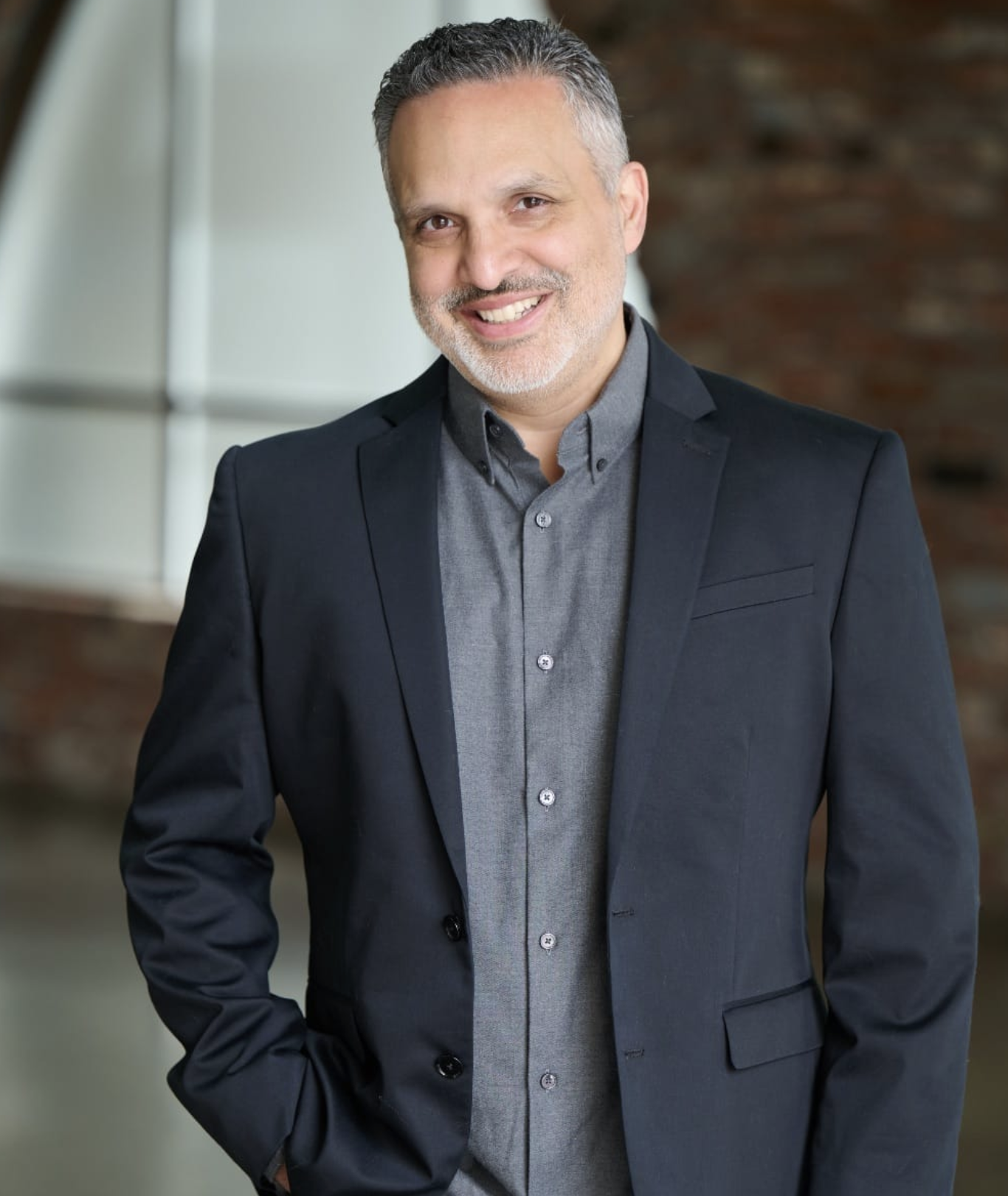
David Das is a GRAMMY-nominated composer and producer based in Los Angeles, working across film, television, and commercial media, as well as modern music production and orchestral arranging. His credits include projects for major studios and networks such as Lionsgate, Disney, HBO, and DreamWorks, with work spanning film scores, TV themes, and collaborations with composer Michael Abels.
He has written and produced music for a wide range of artists including Josh Groban, Katharine McPhee, and Tori Kelly, and contributed to numerous television programs and films. David currently serves as Vice President of the Society of Composers & Lyricists and is Past President of the Academy of Scoring Arts.
David has been publishing his music with ArrangeMe since 2022.
ArrangeMe:
Let’s start with your background. Can you tell us about your early experiences in music?
David Das:
Sure. I was a music lover from before I can remember. I started banging around on toy pianos and stuff like that and as a young kid, I was really attracted to the piano, and I learned to play by ear first.
Sometime in elementary school, I started taking piano lessons and learning some of the fundamentals of reading music. I remember I was pretty precocious. I started percussion and some sax in elementary school and then by the time I got to junior high, I was deep into enjoying the musical culture I was a part of at my school.
And I guess I’d call this my big break: partway through junior high, the school had an upcoming Spirit Week which was Caribbean-themed. My wind ensemble director and I got into a conversation, and he said “Dave, we don't have any Caribbean music. I have no idea what we're going to play.”
Somehow that conversation progressed to, well, maybe I could write something for the band in a Caribbean style. I was 12 or 13 at the time and this challenge really intrigued me. My band director helped me every step of the way. He taught me about transpositions and how the instruments worked.
I was using a very primitive computer notation program at the time (this was about 1987, so I think it was Deluxe Music Construction Set), but I was able to get a score done and then I manually created the parts. It was a lot harder than today's modern notation programs!
I clearly remember that moment of terror, the very first day that he put my music on the stands in front of my junior high peers and I was scared out of my mind because I was like, what if I messed something up? What if a transposition is wrong and it's all cacophony? It wasn't the greatest piece ever. But it worked, and my peers played my music for Spirit Week, and from that moment on, that addiction to writing music had bitten me.
It's funny, I had this exact conversation with Eric Whitacre. For him it happened at age 21, and he remembers that sheer terror of putting that first piece of music on the stands, and then the ensemble makes the music that previously only existed as a hypothetical in your head, and then you record it on paper, and the ensemble makes it come alive, and suddenly there's this mysterious connection between composer and performer as the latter brings to life the creation of the former.
For me, from that point on, I was addicted. I started arranging every piece I could for a wind ensemble. When I got into high school, I discovered choral music, almost accidentally. I didn't have any vocal experience, and I was a pretty shy kid, so I didn't want to sing. I joined choir only because it was the only place in school that I could play piano. I still remember the moment I met my high school choir director, who I'm still friends with today. She welcomed me into the choir room by saying, “I'd love to have you play the piano, but you will sing,” and I firmly replied, “No, I won’t.” And she replied, “Just let me test your range.” I squeaked out a few shy notes, and she put me in the back with the baritones.
What I found quickly was because of my piano background, because of music lessons, I could read fluently, and better than some of the other singers, and before I knew it, I was section leader, and then I joined every choral group at the school. I don't have a great solo voice, but I can blend, tune, and read, and that was enough to move me towards leadership and into progressively more sophisticated repertoire.
Then you add in the junior high wind ensemble arranging story from before, and a new world started to open up to me.
So I started arranging vocal stuff for the choirs and a cappella groups, and again, it kept snowballing. I loved solving musical problems. I loved creating new and interesting things. I learned a lot by transcribing, especially vocal jazz after I discovered Take 6. I'd also write my own songs and my own pieces.
That was just the beginning of my musical journey. I may have started as a pop, jazz, rock, piano player, but the next thing that happened was I got bit by the classical bug. I discovered Gershwin's Rhapsody in Blue when I was about 13, and it completely inspired me. This historic meeting between pop music, or at least a pop music composer of the time, now doing this serious work that was jazzy, yet concert hall at the same time, blew my mind.
I learned it backwards and forwards. I performed it, I re-arranged it. I was taken by it. By the end of high school, I made up my mind: this is what I want to do. I want to go to school for classical music. I want to be a pianist. I want to conduct, I want to compose, I want to arrange. And that’s where the trajectory of my life headed for the next few years.
So that's a little bit about where I come from. That’s my childhood, which was mostly in New Jersey and a little bit in England. I've lived all over the world because I have an international family. I've basically been making music my entire life. That's how things unfolded for me, and I ended up going to college for classical music.
AM:
You’ve worked as a touring musical director with a band. How did that experience influence your work in scoring and record production?
DD:
That was a pretty unique season of my life. I had just finished college, I got married, we moved to Nashville, and I had no idea what I was going to do.
My college degree was focused on classical piano and conducting, and when I finished at the University of North Texas, I knew how to do that, I knew the music history and the music theory. But I had no idea what that was going to mean in the real world, how I was going to find a job, or make a living. I had no practical idea of how I’d pursue this music thing.
Almost by accident, I fell into a touring scene in Nashville. I toured with several pop artists, and was instantly challenged with having to figure it out on the fly. I’d get the albums on CD, and all my transcribing and charting skills would come into play. Then I’d switch into the synth programming side of things, trying to figure out the sounds and patches, which can sometimes be simple and sometimes rather complicated, especially if the artist really wants to match the sounds on the record. I got into Kontakt sampling and soft synths. This was the early 2000’s, when all of that was in its infancy.
Touring the world was one of the great adventures of my life, because I got to make music with people, got to perform on stage, and see the reaction in people’s faces. Normally I’m a studio guy, sitting in front of a computer pushing pixels around the screen, but with live music, you make an emotional connection with the audience and get to feel the emotions of the music reflected in them.
I got to tour for quite a few years and it was an invaluable experience. And, you know, for anybody who's got my type of DNA, as long as we're making music, we're happy campers.
AM:
So with all of these things you've tried, how have you navigated working across these different facets of music, whether that is arranging or scoring, or anything else? How have you found you've jumped from one thing to the other?
DD:
Well, I never set out with a particular plan for my life and what I was going to do. I knew at my core, I'm born to make music. I love making music. That's what I'm best at. I never considered another alternative. But, drilling down to the practical day-to-day, I never thought more specifically what that might ever mean. So between touring or producing records or film scoring or arranging or composing, I've done a little bit of everything.
After Nashville, I moved to L.A., which is where I’ve been for the past twenty-plus years, and that threw me into the epicenter of the media music industry, which turned into one of my biggest passions.
But if I look back on myself at my college graduation, I never tried to map out my life and say I had to do this or had to do that. I just connected the dots from one thing to the next, and I just took whatever opportunities came before me.
And in the process of that, I learned about what I loved, what I can do well, what I have a passion for, what I don’t like. I’ve been freelance pretty much my entire life.
AM:
Well, since you brought it up, let's talk a bit about media music. I think a lot of the people who are going to read the blog might not know a ton about that.
They might not know what that is. So I'd love it if you could go through what that is and your experience with it and what makes that field stand out for you.
DD:
Yeah, that's a great question. When I landed in L.A., I was introduced to the empire that is media music: film music, TV music, advertising, trailers, commercials, all that kind of stuff.
None of those industries were very big in Nashville at the time. Nashville was (and still is) a songwriting town. In L.A., I discovered something that connected the threads of everything I had done before and then let me work in new dimensions: writing music to picture, writing music for a project that is bigger than me. When I was in Nashville, I would produce records or write songs, and the end goal was to have something that the artist and the record company were happy with. There’s a lot of reward in that, and I really enjoyed it, and I still do it today.
But in Los Angeles, it resonated with me in a deeper way when I started being part of media projects that have dozens or hundreds of creatives, each in their own lane. Writers, directors, editors, visual effects, all these people running in a parallel creative lane to me, all working to a common goal to make this massive project the best that it can be, and I fell in love with it.
Media music is also extremely diverse. I mentioned I started my life in pop, and then branched into orchestral, classical, and choral music. In media music, there is no specific right or wrong answer to what style of music you need to write. The only answer is: whatever music is right for that scene. My job as composer is to watch that scene and figure out what music is going to emotionally unlock or elevate the scene. Sometimes the answer is silence. Sometimes it’s a big orchestra. Sometimes it’s one instrument solo. Sometimes it’s rock. Sometimes it’s something so eclectic it’ll never be replicated anywhere else. For me, that puzzle of writing to picture was the culmination of every direction I'd gone before that.
So ever since arriving in L.A., I've scored films, I've written for TV shows, I've continued to write and arrange and produce songs, I've done a lot of commercials, I've done some trailers. Life is so varied. I've done everything from classical to the craziest mashups of styles you can imagine. I get to work with all kinds of really fascinating musicians alongside me and that keeps life interesting.
For me, if I had entered a traditional career path where I was just doing one thing and one thing only for the rest of my life, I think I would have gotten bored and restless. So that's why L.A. has resonated with me, and why media music in particular has really challenged me and why I’ve found career fulfillment in it.
AM:
I'd love to talk about those first couple of gigs. How did you get them? What were they like? What was that learning curve for you?
DD:
Sure. I'll tell you a story that typifies the whole thing. I knew maybe three people in L.A. prior to arriving here. But I remembered, I also landed in Nashville knowing three people, and one of them led to that first touring gig that I mentioned. Gigs usually start small wherever you are. You connect with friends who lead you to friends of friends. Someone’s shooting some short film here. Someone else is doing a little ad there. At the beginning, it’s usually all free or low budget, but you grow through it
Soon after arriving in L.A., a friend invited me to a house where he was shooting a short film. I figured, well, of course, I'll go. I'll just hang out and see how he does his work because at the very least, it'll be an interesting experience. I watched them shoot actors and do a hundred takes of a scene that all looked identical to me. Then I was hanging out by the craft table, and another guy cornered me and he's like, “Hey, so you're writing the music for this thing, huh?” And I said, “I think so!” And he's like, “Well, I'm working on a film of my own, a historical drama. I'd really love some help.” He turned out to be the director of photography for the film set I was currently on. So I replied, “Well, great. Let's chat.”
As I got into his project, I fell in love with the gorgeous visuals and Civil War setting and I thought to myself, “I can write my magnum opus here. I'm so excited. I'm going to write the biggest, best piece of epic orchestral music ever.”
I remember the first several demos that I wrote for him. They didn’t hit the mark. He kept responding, “No, that’s not quite it, try again.” And he didn't know how to explain what he wanted. Some directors are very music-conversant. Others have no idea how to communicate in musical terms what they want. Anyway, at the end of several back-and-forths, he didn't like anything I had written.
It was a frustrating experience. It culminated when I asked, “Can you give me any examples of what you do want?” He sent me a preexisting piece of very simple music; it was just a low synth pad drone and a super high solo violin. He said, “This is the kind of music I'm hearing.” I was almost in disbelief. I said, “That's it? That's all you want? I can write that in like ten minutes.” Sure enough, I did what he asked and the beauty of that scene just unlocked.
I can hear it in my head while we're talking. There was room and there was space and there was atmosphere and mystery. I wrote a soaring violin solo, which I had a live violinist come over and play. I had a low pad drone. That’s all the picture needed for most of its score.
I had started the project with a epic, large-scale symphonic frame of reference, and with a naive erroneous assumption that bigger is better, and the bigger the orchestra, the more magnificent the piece is. But with music to picture, often the answer is different.
Think of it this way. Here at the bottom of the scale is silence. At the opposite end, here’s the max dynamic range of the music you can write. Within that gap from silence to maximum, you can fill that area with a symphony orchestra, you can fill it with a rock band, or you could fill it with a tiny flute part. You’d just have to turn the flute up a lot, right? Or you can fill that space with, in this case, a low synth pad and a high violin and then you just turn it up. Every single option that I just gave you fills the space with a very different character, and very different intensity.
If I sit down at a piano, which is my main instrument, I can pretty much play anything I want to play with a little bit of practice. With that basis, I could theoretically write almost any kind of music out there, if I’m not given some more specificity by collaborators. Collaborators wonderfully help bring direction to a project, and especially when you can discover the center of the Venn diagram and find the areas of mutual passion, that’s where some magic can happen.
When I’m writing to picture, I actually enjoy working within the limitations of the world I live in. In the earlier example, I challenged myself to write for low pad and high solo violin. But the world can just as easily be an ensemble, maybe a choir or a wind ensemble or an orchestra or a rock band or a jazz trio. A composer or an arranger enters the conversation and can explore what the ensemble’s possibilities are within the context of the world of the film.
I do a fair amount of collaborating with ensembles and directors in the ArrangeMe universe, and I end up asking questions, like: Who are you? What interests you? What music do you love? Do you love Rhapsody in Blue? Do you love Pink Floyd? I want to know what's in your DNA and then, of course, I need to know your instrumentation. I need to know your approximate difficulty level because I want to write something that's going to be attainable for you. Sometimes that’s simple diatonic three-part chorale writing, or for other people, it can be 18-part polyphonic contrapuntal stuff with mixed meters.
Some choirs have two people to a part. Some choirs have dozens of people to a part, so you can do divisi. So when I’m working with an ensemble, I need to know what my parameters are. Once I feel like I have a good read on what this collaboration is going to be, now we can talk about, “Okay, what kind of piece do you want to do? Are we doing a cover song, an arrangement of something that already exists? Or do we want an original composition? If we want an original composition, what would your group like to do, what would excite you?”
Because the sky's the limit. I’m thrilled to be thrown a challenge to write something specific. It might not even be easy for me to write, but in the end, I want you to be happy with it. So I start all my conversations like that. It's a collaboration. It's a bunch of people who love music figuring out what can we do together.
AM:
I think that's really very, very, valuable info to somebody who might not have experienced that process before.
That's really what we try to do with these interviews. We want to get to know you and we want to get to know your experiences, of course, because people are curious about this kind of thing, but it's also really helpful for folks who might not have worked in collaborations like this.
Figuring out a starting point. It is a way of saying, okay, here are several options of how to approach a project. Whether you're creating something new, whether you're just starting to work with a collaborator for the first time.
With that, I'm going to ask about one of your larger scale projects, Impossible Dream. It seemed like, at least from the outside, there were a lot of cooks in that kitchen, musically. What did collaboration look like on that project? How did you approach that differently?
DD:
Well, that was probably the most unique project of my life. So Impossible Dream is an album by Aaron Lazar. Aaron is actually a childhood friend of mine and we grew up singing in high school choir and a cappella groups together. He went on to become a very successful Broadway star and actor. He's been in everything, Light in the Piazza, Les Mis, Phantom, that caliber of stuff on Broadway. And our lives have crossed paths many times over the past few decades. We'd always tried to do stuff together.
Well, tragically and unfortunately, he was diagnosed a couple of years ago with ALS, Lou Gehrig's disease. It's almost unthinkable and for me to see it in someone who's literally my age was frightening. But Aaron decided that he's going to fight this. He's not going to just give in to what other people might see as a death sentence. He's going to live life to the fullest. And he developed what he felt was his impossible dream, and that is to provide hope and positivity through music.
So he called every friend he had ever worked with, from Lin-Manuel Miranda and Sting, Kristin Chenoweth, Josh Groban, Neil Patrick Harris, on down and he said: “I want you to be a part of this,” and that's how the record started coming about. Once one artist said yes, it snowballed into the next artist, and culminated in some huge sessions which we did both in New York and in Los Angeles.
The central theme of the record is “The Impossible Dream,” the classic inspirational song from Man of La Mancha, and then he pulled a lot of different songs from different areas of his life that spoke that message of hope that he was looking for.
So it ended up being an all-star record that made it all the way to the GRAMMY nominee stage. We didn't end up winning. We lost to Norah Jones, my college nemesis. I went to college with her at North Texas. But what a ride to be backstage at the Grammys holding hands with my childhood friend having accomplished the project of a lifetime.
The collaborative process is an extension of the stuff that we talked about earlier. It's friendships. It's making music together. It's also problem-solving, musically and otherwise. And when you do it all, you’re able to make some beautiful, beautiful music together.
There was one day that Aaron and I and Josh Groban ended up by the piano completely unexpectedly, and we decided to just freestyle on a song. We played and sang together and within a few minutes, we were like, “There's some magic happening here. We got to capture exactly what we're doing right now.”
So that ended up being a cover of Sting's song, “Let Your Soul Be Your Pilot.” I played piano on that, and later I arranged the orchestra that was added to it after the session. No click or preconceived arrangement; that was just like the three of us in the room together, flowing and playing it very freely and naturally.
And funny thing, that same day, after probably one of most memorable sessions of my life that already felt like a Mount Everest moment, someone from the studio comes in and says, “Hey, do you guys know the Beach Boys are in the studio next door? Maybe they'd want a guest spot on the album?” An hour later, I’ve got two of the Beach Boys sitting around the piano with me and I'm teaching them parts. “You sing this part, you sing this part, you ready?” It was like being in my high school a cappella group again, except this time with the Beach Boys.
These magical moments can happen often in music, in the studio. And the whole album was quite a feat of playing, arranging, orchestrating, mixing. So even after Josh or the star goes home, we have more arrangements and adjustments to do. Once some core tracks are in place, especially the vocals, now we can dress it up with other things.
So definitely the project of a lifetime to be a part of. We're all immensely proud of it and yeah, looking forward to more.
AM:
I don't want to discount the magic of ending up in those places and just having the Beach Boys next door. I think it is very important that you emphasize the fact that you need to know people, that collaborative magic can happen anywhere on any scale. There is no way of knowing what those collaborations can turn into down the line.
DD:
I agree. In music, in the arts, on the stage, backstage, in front of a camera, and even behind the camera, that creative magic can happen anywhere. I’ve lived in urban, suburban, and rural places all over the world. It can happen anywhere.
I hate calling them connections because I don't think of anybody as a connection. I think of the people I work with as friends. I love having friends. I don’t like having connections. I'm not a schmoozer and I don't like exploiting people for possible opportunity. That seems like the wrong way to go about it. Every opportunity that I've ever found in the industry has come through friends and not necessarily me looking for it. Just doing what I do, being who I am, being nice to people, trying to serve people and share the creativity.
Each of us can make that happen and sometimes it's the most unlikely people or opportunities that open doors for you.
“Every opportunity that I’ve ever found in the industry has come through friends and not necessarily me looking for it. Just doing what I do, being who I am, being nice to people, trying to serve people and share the creativity.
Each of us can make that happen and sometimes it’s the most unlikely people or opportunities that open doors for you.”
AM:
So I do want to jump next to your experience with the Society of Composers and Lyricists. You joined this group when you were newer to L.A. How did the mentorship you received there and the networking that you received or that you found there shape your career?
DD:
The Society of Composers and Lyricists (we call it the SCL for short), is a really important composer and songwriter group. It's based in L.A. and there's chapters in Chicago, Nashville, and New York, but anybody can join even if you're not in one of those four centers.
When I first arrived in L.A., they provided me with such a wonderful background to the industry part of things. I met composers who did things I was dreaming of doing. I met people in every adjacent industry or on the business side or on the practical side, arrangers, orchestrators, agents, all that kind of stuff. In L.A., there's micro-industries for each of these things. Music editors, score prep people, MIDI cleanup people, all that kind of stuff. These are all valid and important micro-industries.
So the SCL runs a mentor program. I applied as soon as I arrived in L.A., and I was accepted to it and through that, I got baptized into the city’s creative industries. The first thing I went to was an 80-piece orchestral session with Alf Clausen conducting a live orchestra for The Simpsons. Just to be in the room with that air moving and those famous themes, watching him conduct the music for the episode, that was pretty amazing. I already knew Alf’s genius, but to see it unfold in person was something else.
So I started volunteering with the SCL and leading seminars on topics I had experience with. Then about 10 years ago. I joined the board, and a year and a half ago, they elected me VP. So I do a lot with them, especially on the technology and the advocacy side of things.
The SCL offers a lot of ongoing education, a lot of seminars and screenings, and it provides career support to composers and songwriters. All the real-world stuff that you don’t always learn in college.
AM:
You also maintain an active YouTube channel. There, you dive into quite a few different topics. What inspired you to start a YouTube channel and what impact do you hope that you're making through that?
DD:
That was another happy accident. So I'll start with this story. Probably twenty years ago, I did my first recording session in Prague. I was conducting the orchestra and at the time, I got some video footage but didn’t think anything of it and didn’t do anything with it. This would have been the pre-social media age. But years later, I rediscovered the video and thought, “Why not post it?” When I did, I got this unexpected flood of comments.
One comment in particular stood out to me and it was from somebody I knew well from high school. She said, “This is the coolest thing ever, but I had no idea you did this.” A light bulb went off in my head that while it was “a day at the office” to me, if I don’t share this stuff, no one will know about it.
It impressed upon me that it is actually important for me to be involved in the social community, both for my own visibility, and also to be able to share knowledge and experience with the community.
I still didn't take YouTube very seriously, but there was this one day in 2016, I was about to do a personal score study. I wanted to figure out how John Williams got that Star Wars sound, so I blocked off a few hours to sequence the first few pages of the Star Wars score, instrument by instrument. Studying the score down to the individual note level and individual instrument level can be eye-opening.
Right before I started, I looked over to my side and there was a camera right there, and I had the thought, “Why don't I hit record and put a mic in front of me, and I'll just narrate what I'm doing, and maybe someone else will find it useful.”
This was 2016, back before YouTube was awash with tutorials in that style. That video went unexpectedly viral. I never thought it was particularly high-value. I just thought it would be me talking about some stuff I’m doing for myself, and that very few people would be interested. But with its unexpected popularity, I realized YouTube in particular, as well as the other social networks, can be a very valuable place for the sharing of information and inspiration.
I also realized something about myself: that I love talking about the craft of what we do. I have a decent knowledge of music history and theory, and I love taking stuff apart. Even in the process of taking stuff apart, I'm learning techniques that I might use in future compositions.
So from that point on, I just started taking YouTube a little more seriously. I still don't feel like I have a grand strategy in mind, but anytime I feel like I have something to say, or I discover something new in software I'm using, or I hear a cool piece of music and I have something I want to say on it, I switch on the camera and start talking. I can capture my screen easily if I want to demonstrate something on the computer.
I usually don't fully script my videos. Sometimes I’ll have a few bullet points sketched out. I just speak to the camera one sentence at a time, and if I stammer or get a word wrong, or think I could say it better, I just say it again. Then afterwards in editing, I cut out all the bad takes. I don't care if there’s jump cuts from line to line, because I think in this day and age, people appreciate just getting to the point.
So my production process is very low impact. It's easy to do and I can flow naturally. I wish I had more time because if I had it in me, I could probably do it full-time, but I'm too much of a composer. I'd rather be writing music. So YouTube is a fun side thing.
I earn a little bit of money off YouTube monetization. But really, the point is to help the community, inspire the community, and say to the world, hey, I'm a composer, I'm an arranger, and if you like hanging out with me on YouTube, get in touch.
AM: It is, at the end of the day, another excellent tool for sharing who you are, sharing your work, and sharing just the sheer fact that you have music out there. Have you noticed people finding your music that you have available for sale through YouTube?
DD:
Absolutely. That could probably be a seminar in and of its own, because when I write a piece for ArrangeMe, I go through quite a multi-step process to prep a piece for publication, I can give you a quick summary now, and maybe another time we can get into the details.
Obviously there's the first step: the writing of the actual music in my notation program. I’ve used Finale and Sibelius in the past, and I currently use Dorico which has been a great step forward. I use MOTU’s Digital Performer as my DAW.
It’s really, really important to go the extra mile in proofreading it. It should look like professionally printed sheet music. I meticulously check mine for errors. I play through the MIDI, make sure there's no wrong notes in there. I frequently even like to sing through each of the parts to make sure there's not a dynamic marking missing or something that would trip up a musician who's actually reading it in the real world. I look for weird intervals, out-of-range notes, and voicings that don’t hit in the smoothest way, and I try and improve on all those. So I have a whole process for polishing the engraving.
But there’s a lot more too it. The chances of an arrangement finding much success are fairly low unless I have a really good demo to demonstrate the arrangement. So I have to produce a demo of it. If it's a choral or a vocal thing, there has to be singing. If it's an instrumental thing, I need a mock-up. NotePerformer is great for orchestral work. And there are new tools just hitting the market now which are really interesting for vocal work, like Cantai and Dreamtonics Synthesizer V.
With tools like that, it’s pretty easy to make part learning tracks, which is another thing I offer to buyers whenever I can. I have a whole process for creating those quickly from the individual tracks of the demo.
There's other things that can help the arrangement find success. I often make a scrolling score YouTube video, which requires just a little bit of video editing skills. Writing a YouTube description is important, including information about the arrangement, the voicing, its difficulty, and even anything historical or noteworthy about the song or its original singer(s). Remember that YouTube is a massive search engine of information of its own, so keywords go a long way. And of course I include the links to actually buy the arrangement (which you can only get after you submit to ArrangeMe, so you have to flip back and forth during the publishing process).
Making a nice cover to put on the front of the arrangement also increases its chances of success. I put my bio on the last page of the arrangement, that way anyone curious can follow up with me if they want to. And many do.
It's been really fun. I've discovered so many collaborators. Directors or ensembles will write in and say, “Hey, I purchased your arrangement for this and we're having so much fun with it. Do you have anything more like it?”
So we engage in those kinds of discussions and it's such a wonderful community. I'm so grateful to your ArrangeMe team for what you've created there. It's been awesome. It's opened a lot of doors.
AM:
Thank you so much, you answered one of my final questions, of course we have to talk about ArrangeMe, just a follow-up on that. What brought you to ArrangeMe?
DD:
I don't remember how I found it. But it certainly, in the years prior to ArrangeMe, that had been a very consistent problem for arrangers. It was very, very difficult to get the legal rights to arrange copyrighted works for print. Having the licensing sorted and to have such an easy and free way to handle all that legally was a lifesaver. And of course, composers can also self-publish their original works using the same channel.
That licensing system really didn't exist broadly before ArrangeMe. I had tried going the route of approaching publishers directly, but that was a lot of paperwork and a lot of costs too, because publishers are not typically friendly to individual arrangers.
So, the fact that ArrangeMe has streamlined all that for us, and I can have a title up on ArrangeMe literally within hours of finishing it, and it can be out into the world, and there's no red tape — that’s awesome, and it actually incentivizes me to write more.
We just passed the GRAMMYS and the SCL Awards too. I avidly looked at all the nominees for best song, and listened to them with my arranger cap on to decide if I could see any arranging potential in any of them. And that’s a great place to start.
One last thing I'll say about ArrangeMe: I assume the core demographic might be school or college ensembles and maybe some freelance ensembles who are looking for repertoire. So there's always that balance between doing arrangements that are very faithful to the original, versus arrangements where I might put a significantly different stylistic spin on it.
I do a bit of both, but the common thread between either of those two approaches is making the arrangement accessible and performable. You can't write three vocal lines, then divisi into 18, because some ensembles can't do that. So there are limits of practicality that, if I consider them, make it a more appealing arrangement.
So I decide at the beginning: is this a three-part arrangement? Is it a four-part arrangement? And once I have my assignment, like, let’s say I decide I need six voices to do this the way I hear it in my head. Now, I'm going to live in that world of six voices. Those are my limits and I'm going to do everything I can to stay within that, and ensembles that are looking for six-part material can consider it. But this is all an important part of my thought process.
When I’m arranging for a potentially worldwide market, I’m always thinking about making sure the arrangement is accessible. Take someone like Jacob Collier for example, and this is no shade thrown at Jacob Collier, who is amazing. But, when it comes to re-creating those arrangements, who can do it except him? Most of his complex recordings aren’t that accessible. They're fun to listen to, and there's a lot of ear candy there, and he does it like no one else on the planet can do it. But is it possible to simplify it to work with a standard academic ensemble? Often not, occasionally yes.
I do try to make my arrangements accessible, performable, and incorporate as many fun, good, intriguing, clustery, whatever it is, elements that will make it a successful performance piece. And I try and make sure it’s fully polished so that an ensemble can dive into it quickly and easily and not have to work around errors or oddities. And I certainly don’t want someone purchasing an SATB chart as a four-member group then discovering too late that the chart requires divisi, which they can’t do! So I’m always thinking practically do my best to explain what I’ve created so that performers have the best possible preview of what they get when they buy my work.
AM:
Absolutely, I'm sure it flexes a different muscle than when you're working with studio musicians as well.
DD:
Yeah, working in the studio is much more an in-the-moment thing. Let’s say you have a great session guitarist. He or she can take a chart that you've meticulously written, and think of something new, and on the spot, you might create something new and take that song in a new direction.
Creating an arrangement for print is a little bit different because all the magic is happening during the preparation and arranging phases, and then I'm releasing it to the world, and those ensembles will find ways to perform it that are unique to them and their skill level.
It's good to have limitations. I love jazz and I also love making jazz accessible. I've done vocal jazz arrangements that are three and four parts, which means you have to leave out a lot of the harmonies.
Can you arrange jazz in just three parts? The answer is yes, you can, if you know how to voice chords. It’s a fun challenge to figure out the most important harmonies so that the piece still makes sense, and the voice leading is something that can actually be performed with some degree of smoothness. You don’t want weird unpredictable chromatics going in all kinds of random directions if you’re arranging for high school singers.
AM:
Very nice. Well, David, this has been so much fun. Really, truly, so much fun. Last thing, is there anything you want to plug?
DD:
Feel free to visit me on social media. I'm @daviddas everywhere, or you can visit my website, if anybody wants to get in touch.
I've got a really interesting new project to plug and this is the first time in my life I've done this. I wrote a new concert piece, which is a tribute to two composers who changed my life, George Gershwin and Leonard Bernstein. I wrote this hypothetical orchestral piece with the premise of, “What if these two men met in real life? What would that musical conversation be like?” (They never did meet in real life.)
They're two huge icons of American music. They both had jazz influences, but they also had very, very different musical personalities.
So I wrote this piece called “Lenny and George Walk Into a Bar,” and I'm really excited about it. I love those two composers, and I love this little homage that I've built to them. And I am right at the beginning stages of figuring out what to do with it in terms of getting it performed, recorded, and published.
So this entire year is probably going to be problem-solving that question. I'm going to write a separate companion piece, not particular to Gershwin and Bernstein, but it has some elements in common. And once both pieces are recorded, it’ll become a new record that I'd love to submit for the GRAMMYS when we get there. I have a lot of hurdles to cross with this passion project.
So that's my dream. That's my impossible dream and I don't even say that tongue-in-cheek. Aaron did his impossible dream. This is my impossible dream. How do I make this music come alive? I don't know yet, but we're going to figure it out.
I'll probably drip some stuff out on social media throughout the year as soon as I feel like I have the language for it and figure out how to talk about what I'm doing.
To find out more about David and his music, visit daviddas.com and be sure to follow him on YouTube and Instagram. You can find his charts on Sheet Music Direct, and Sheet Music Plus